
Guild Wars: Reforged brought everything back, completely revamping the original Guild Wars for a new generation of players. It’s currently hitting record numbers on Steam, with bustling cities and even more content on the way.
The Game That Never Really Let Me Go
There’s a game that shaped my childhood and early adulthood in ways I didn’t fully realize at the time.
It was what I played after school.
It was what I escaped into when things weren’t great.
And, if I’m honest, I spent an absurd amount of time in it.
In 2026, I genuinely believe this game is more relevant again than it has been in the past decade.
I’m talking about the original Guild Wars.
It’s the game I still log into every now and then, just to listen to the music, walk around, and soak in the atmosphere. But for years, those visits were short-lived. I had already earned almost every title, unlocked nearly everything there was to unlock, and after a few minutes of nostalgia, I’d log out and jump back into Guild Wars 2.
That changed with Guild Wars: Reforged.

What Is Guild Wars: Reforged?
With Guild Wars: Reforged, ArenaNet essentially relaunched the original game. It comes with improved graphics and audio support, a modernized UI, Steam and Steam Deck support, and crucially, two brand-new game modes that completely shake up how the game is played.

On top of that, the pricing has been reworked. You can now buy all three major Guild Wars campaigns for around 20 dollars. Each one offers a full storyline, unique environments, and new professions to play.
- Prophecies (2005) is the original campaign and the core Guild Wars experience. It’s classic fantasy: castles, monsters, snowy mountains, and wide open fields. It also takes place in regions that later became central to Guild Wars 2.
- Factions (2006) brings a strong eastern-inspired aesthetic and introduces two new professions: the Assassin and the Ritualist. It’s set in Cantha—the same continent revisited in Guild Wars 2: End of Dragons—and feels more polished than Prophecies.
- Nightfall (2006) rounds things out with a North African–inspired setting and adds the Dervish and Paragon professions.
The only expansion not included in this bundle is Eye of the North, which acts as the narrative and mechanical bridge between Guild Wars and Guild Wars 2. More on that later.
When I first heard about Reforged, my reaction was simple: Nice. New life for my favorite game of all time. I figured I’d revisit it on stream, walk through the cities, enjoy the nostalgia, and move on.
That was not what happened.
A Quick Guild Wars 101
Before diving deeper, it’s important to understand one thing: Guild Wars is not Guild Wars 2.
The original Guild Wars isn’t a traditional MMORPG. It’s an instanced co-op RPG. You form a party in town and then head out into private mission areas. You won’t randomly encounter other players while questing—but preparation, teamwork, and planning matter far more.
When you create a character, you choose between a Roleplaying or PvP character. If you’re new, Roleplaying is the way to go. PvP characters are powerful, but complex, and better tackled later.
You then select a campaign and a profession. That profession is permanent, but later on you unlock a secondary profession that you can swap freely, allowing for massive build variety.
With that out of the way, let’s talk about why Reforged actually matters.
The Moment Everything Changed
Guild Wars: Reforged was officially announced on December 3rd, 2025. Alongside the graphical and technical upgrades, the repricing made it much easier for new players to jump in.
What’s especially interesting is that Reforged isn’t being developed directly by ArenaNet, but by a studio called 2Weeks, co-founded by former ArenaNet developers who originally worked on Guild Wars. Their focus is on continued development of the original game.
Almost immediately after the announcement, the cities started filling up. New players, returning veterans, Steam users, old accounts… it didn’t matter. Tyria felt alive again.
At first, I thought that was it. Same game, shinier coat. Nice, but familiar.
Then, on December 18th, 2025—barely two weeks later—everything changed.
Without much warning, two completely new game modes were introduced.
Reforged Mode and Dhuum’s Covenant
When creating a character, you can now opt into two new modes.

Reforged Mode
Reforged Mode is an experimental reimagining of the original Prophecies campaign, designed to reflect how the game felt closer to its 2005 release, while still making adjustments for modern players. It’s still in testing, and changes are ongoing.
The biggest changes currently affect Pre-Searing Ascalon, the tutorial area of Guild Wars.
Back in the day, one of the most prestigious achievements was the Legendary Defender of Ascalon title, earned by reaching level 20 without leaving Pre-Searing. It was difficult, required careful planning, and involved a serious grind.
Reforged Mode brings that challenge back—with a twist.

There’s a new outpost, Piken Square, where players now gather to hunt Charr for experience. Enemy stats have been rebalanced: weaker enemies are easier to kill, while harder areas feature more enemies and tougher encounters.
The result? Pre-Searing Ascalon is alive again.
Dhuum’s Covenant
Dhuum’s Covenant is where things get really interesting.
This mode is best described as an Ironman-style challenge. While you can still trade and interact with others, your character receives a special badge—and if you die, you lose it.

Guild Wars already had the Survivor title, which rewarded players for leveling without dying. Dhuum’s Covenant takes this concept much further. Any titles you earn while the Covenant is active are marked with a visible badge, signaling that you earned them without dying.
If you die, you keep your character and your titles—but future achievements won’t receive the badge.
Veteran players immediately saw the challenge: combine Reforged Mode and Dhuum’s Covenant to attempt Legendary Defender of Ascalon without dying.
And suddenly, people I hadn’t spoken to in 15 years were back online.
Why Players Are Returning
Reforged Mode is currently exclusive to Prophecies, but Dhuum’s Covenant works across all campaigns. Want to play a Ritualist in Factions? Go for it. You can still earn Covenant-marked titles and show them off.
For new players, the pricing makes Guild Wars incredibly accessible. For veterans, the new modes add real stakes and meaningful challenge without rewriting the game.

And there’s another layer to this—especially for Guild Wars 2 players.
Before Guild Wars 2 launched, many players chased the legendary God Walking Among Mere Mortals title. Titles earned in the original game could be displayed in the Hall of Monuments and unlocked exclusive rewards in Guild Wars 2—skins, minipets, and even the title itself.
I still wear that title in Guild Wars 2 to this day.
There’s even an online calculator that shows exactly which Guild Wars 2 rewards you’ll unlock based on your progress in the original game. Just remember: you’ll need the Eye of the North expansion to access the Hall of Monuments.
My recommendation? Play the Reforged campaigns first. If you enjoy them, then pick up Eye of the North later.
My Personal Experience With Reforged
I first jumped back in on stream with a fresh character, purely for nostalgia. I put in about 15 to 20 hours just reliving memories.
When Reforged Mode launched, I deleted that character and started over.
That’s when it really hit me how alive the game had become.
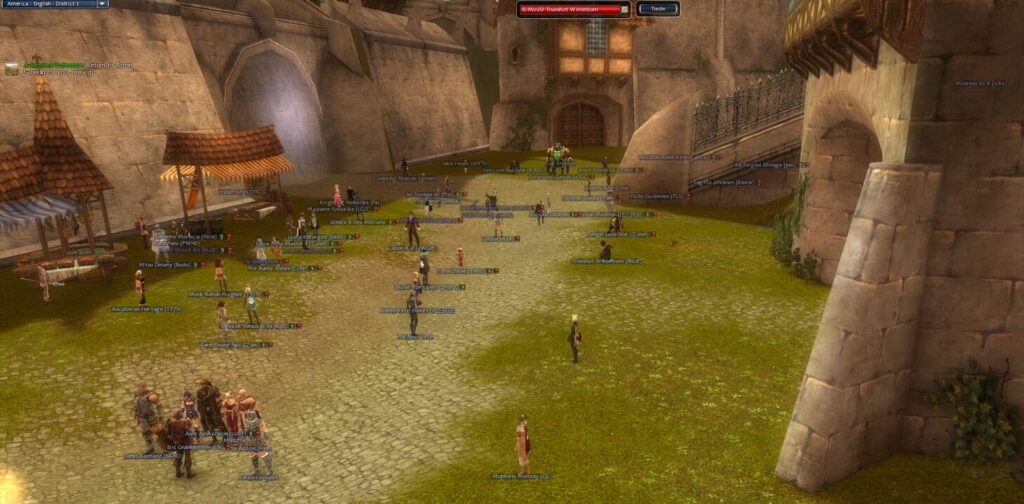
Ascalon City was split into over a dozen instances just to handle the player count—something I don’t even remember seeing back in the original launch years. And it wasn’t just starter zones. Lion’s Arch, Kamadan, and Eye of the North were packed.
I set myself one goal: earn Legendary Defender of Ascalon without dying.
People grouped up constantly. Players communicated, warned each other, and worked together. When someone lost their badge, you felt it. And eventually, I made that mistake myself. One bad pull. One death.
So I did what many players do—I started over.
And strangely enough, failing didn’t feel discouraging. It felt like part of the journey.
Should You Play Guild Wars: Reforged in 2026?
If you’re a returning or existing player, this is an easy yes.
If you’re new, it depends.
If you enjoy traditional RPG design, value cooperation, care about Guild Wars lore, or want to unlock Guild Wars 2 rewards, Guild Wars: Reforged is absolutely worth trying. The amount of content you get for the price is incredible.
That said, it’s not Guild Wars 2. The gameplay is slower, more tactical, and more demanding. Learning builds, missions, and systems takes time.

But if you’re willing to meet the game on its own terms, it’s incredibly rewarding.
So, if you are conviced you can get the game on Steam or on the official store.
Reforged Mode and Dhuum’s Covenant are only the beginning. Both are still in beta, and their popularity suggests more changes are coming in 2026 and beyond.
In my opinion, this is how you update a classic: improve visuals, add optional systems, respect the original design, and give players a reason to care again.
So, what do you think about Guild Wars: Reforged? Have you played it, or are you thinking about starting?
